
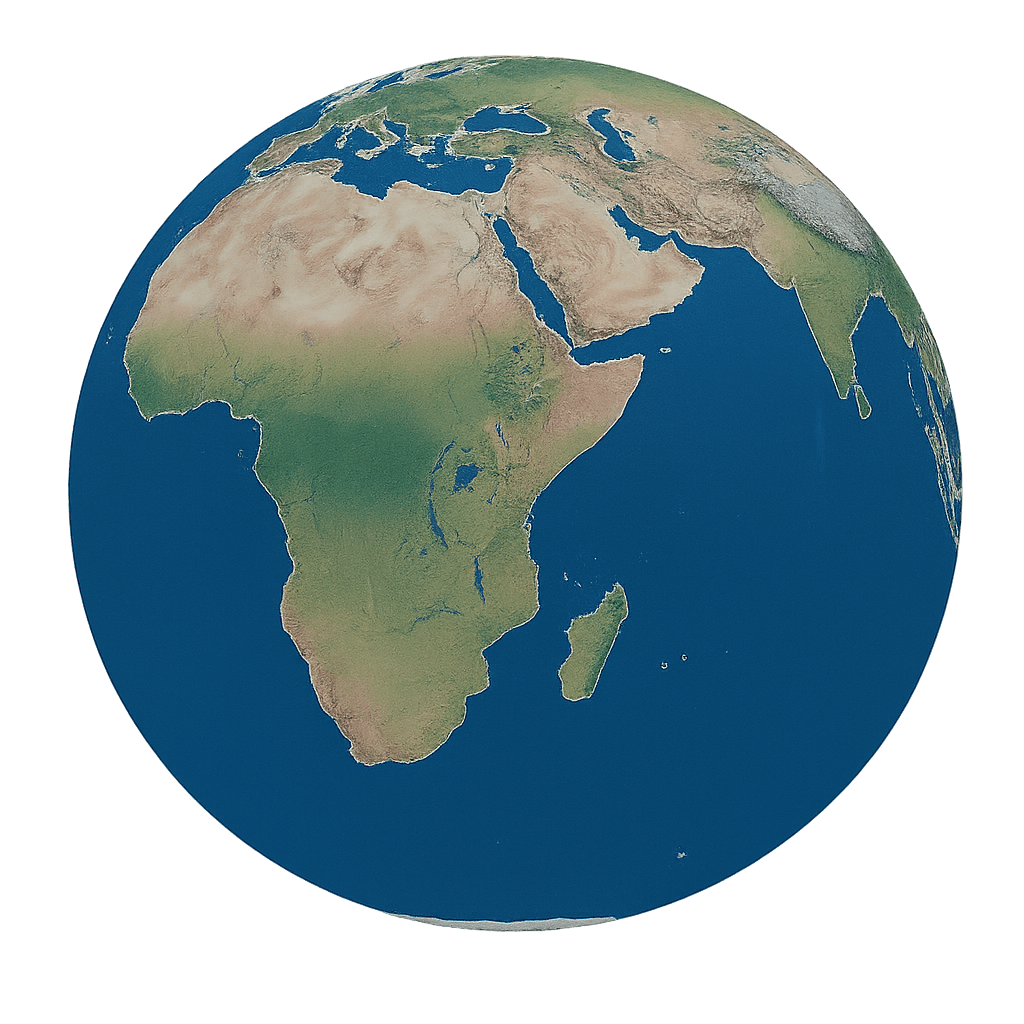
Competing for allies in the Indo-Pacific: The first CGSC CASO panel of the academic year discussed allies and partner building in alignment with curriculum, current national security environment
FORT LEAVENWORTH, Kan. - Since 1881, the U.S. Army Command and General Staff College has developed leaders and created lethal warfighters ready to fight the next war.
The current national security environment coupled with directives from senior leaders has aligned the college’s mission to that a lethality and preparedness for conflict in several fronts, the largest being the Indo-Pacific.
The first Cultural and Areas Studies Office panel of the academic year, through experts in the region, focused on the strategic power of partnerships and allies in this operating area.
“While this [CGSC’s] mission is fundamentally tactical, those tactical problems always have a strategic and operational context. And that's what brings us together today,” Col. Dave Norris, Commandant, CGSC said. “Understanding that context is critical; it's a professional responsibility that we all share. Our CGSC CASO panels enhance our understanding of both regional and global geopolitics, arming future leaders with the depth of knowledge that appreciates the strategic and operational context of these critical issues.”
Panelists included: Dr. Philip Hultquist, Director, Global and National Security Policy Institute, Department of Political Science, University of New Mexico; Dr. David Hunter-Chester, Assistant Professor, CGSC’s School of Advanced Military Studies; and Lt. Col. Jason LeVay, Instructor, Command and General Staff College’s Department of Joint, Interagency, and Multinational Operations.
“…The region encompasses Asia, Africa, Australia, and America, making it one of the most populous and economically active regions in the world. It is increasingly becoming one of the most important epicenters of the ‘Great Power Competition’ or ‘Competition of Alliances,’ which might be shaping with conflicting agendas and national security interests to the U.S. and its partners,” Dr. Mahir Ibrahimov, Director, CASO explained.
The rapid change of this area and the BRICS alliance is reshaping this region’s geopolitical and economic powers.
According to Ibrahimov, the changing and expanding BRICS, which recently added Iran, Egypt, the United Arab Emirates, Indonesia, and Ethiopia, “represents a collective GDP of more than $31 trillion, accounting for approximately 27% of global GDP, according to recent estimates. This substantial share makes BRICS one of the most influential economic groups in the world.”
This rapid financial growth could create a global financial shift potentially creating a new geopolitical dynamic between not only U.S. and China but the smaller nation states now joining influential alliances in the region. “Although some experts note that this organization might not be unified and efficient in achieving its stated results, however it’s very important to note that BRICS is increasingly attempting to position itself as a counterweight to U.S. led financial dominance, and the petrodollar sits at the center of that shift,” Ibrahimov said.
India: the gate or gatekeeper to Indo-Pacific influence? Previous SAMS instructor, Hultquist introduced India as the focal point of Southern Asia influence.
He explained their “backyard mentality” makes it difficult for smaller South Asian nations to engage partnerships or alliances, or they liaise U.S. and South Asian nation collaborations leaving little space for those nations to operate independently.
Because of this sibling-like influence in this region, the U.S. has adopted a hub-and-spoke approach to gaining India as long-term values-based partner.
India is situated at the center, or hub, playing to their desire to be the area’s central power.
“The US has dealt with this by deciding to trade access to the smaller states in the region for a chance at an India partnership,” Hultquist explained.
He continued that this strategy places India not only at the center of influence denying China’s advances among the smaller nations, but also as a “strategic counterweight” in China’s backyard.
Economically, China, through its Belt and Road Initiatives, is succeeding in expanding its influence over the small Southern Asian nations, slowing U.S. partnership progress.
Despite the economic struggle, the U.S. and India’s alliance has begun to thaw over the last several decades demonstrated in the increase in military exercises and military-industrial base collaborations.
Military power influence is only a piece of the puzzle to gain control of the Southern Asian area of the Indo-Pacific, Hultquist explained.
“The defense-to-defense ties are really strong and growing, but the executive-to-executive ties are at a bit of a low point,” Hultquist explained. “The military instrument for competition is really important, and it's really the only one that's working well. But you can't replace all of the instruments of national power.”
Japan’s history, leader-driven ally decisions Hunter-Chester discussed Japan’s many roles in the region, through is expertise as a retired colonel, serving at operational and strategic levels in Japan, Iraq, and the Office of the Secretary of Defense.
Japan’s influence in the region saw decades of leadership-driven economic vice defense partnership.
A combination of humiliation over not contributing defensively to the first Gulf War, forced a change in the Japanese culture as an ally, Hunter-Chester explained.
He continued, that the next leader, Shinzo Abe, wrote the first Japanese National Security Strategy focused on a “free and open Indo-Pacific”. This phrase would become not only be borrowed in U.S. military policy, but a cultural viewpoint across global national security discussions.
Japan’s newest leaders continue to drive defense-related change within the country, further demonstrating the importance of their long-standing alliance with the U.S.
ASEAN’s hedging behavior and allyship The 11-state ASEAN in Southeast Asia has morphed and expanded within the Indo-Pacific, shifting the alliance’s influence within the region.
“ASEAN provided a means to reduce regional conflict, preserve sovereignty, and manage relations with stronger external powers,” LeVay, strategic intelligence office said. “That preference remains visible in the ASEAN outlook on the Indo-Pacific, which emphasizes openness, inclusivity, centrality, and the need to avoid mistrust, miscalculation, and zero-sum competition.”
LeVay explained this foundational viewpoint drives the alliance’s “hedging behavior”, providing insight to other global powers like U.S. and China, who are actively seeking collaboration or alliance with its member nations.
Key attitudes and behaviors of ASEAN members, Levay explained, include of those spanning economic, defense, and political power across the globe with a list of nations, with only national gain driving decisions.
U.S. and China’s approaches to garnering relationships with ASEAN nations is different, LeVay explained, but both continue to gain dominate ground within the region.
Chinese pressure makes headlines regularly specifically in the maritime domains in the South China Sea. U.S. pressure steps into the economic and political lanes in the form of tariffs, supply chain restructuring, and posturing access.
“The important point from a Southeast Asian perspective is that either relationship becomes problematic when it begins to reduce sovereign choice. That helps explain ASEAN's continued emphasis on openness, inclusivity, and avoiding zero-sum competition,” LeVay said. “For U.S. military planners, that distinction matters. Actions intended in Washington as deterrence or burden-sharing may look different to a government whose objective is to preserve autonomy.”
This autonomy of choice, LeVay concluded, is key to engagement with ASEAN states.
“The United States does not necessarily need Southeast Asian states to choose America. It needs to remain a partner they repeatedly choose,” he said.
The full discussion including the question-and-answer session can be viewed on CGSC’s DVIDs page: https://www.dvidshub.net/video/1024239/strategic-competition-alliances-and-partners-indo-pacific-caso-panel.
Legal Disclaimer:
EIN Presswire provides this news content "as is" without warranty of any kind. We do not accept any responsibility or liability for the accuracy, content, images, videos, licenses, completeness, legality, or reliability of the information contained in this article. If you have any complaints or copyright issues related to this article, kindly contact the author above.
